
what is shockwave therapy?
by Manisha Wijayanayagam, Physiotherapist and Pelvic Health Provider
Shockwave therapy is an increasingly popular, evidence-based treatment used in rehab spaces to address a variety of persistent musculoskeletal conditions. Despite its name, it’s not as intimidating as it sounds. In fact, it’s a non-invasive, clinically proven option that can help reduce pain and stimulate healing.
What is shockwave therapy?
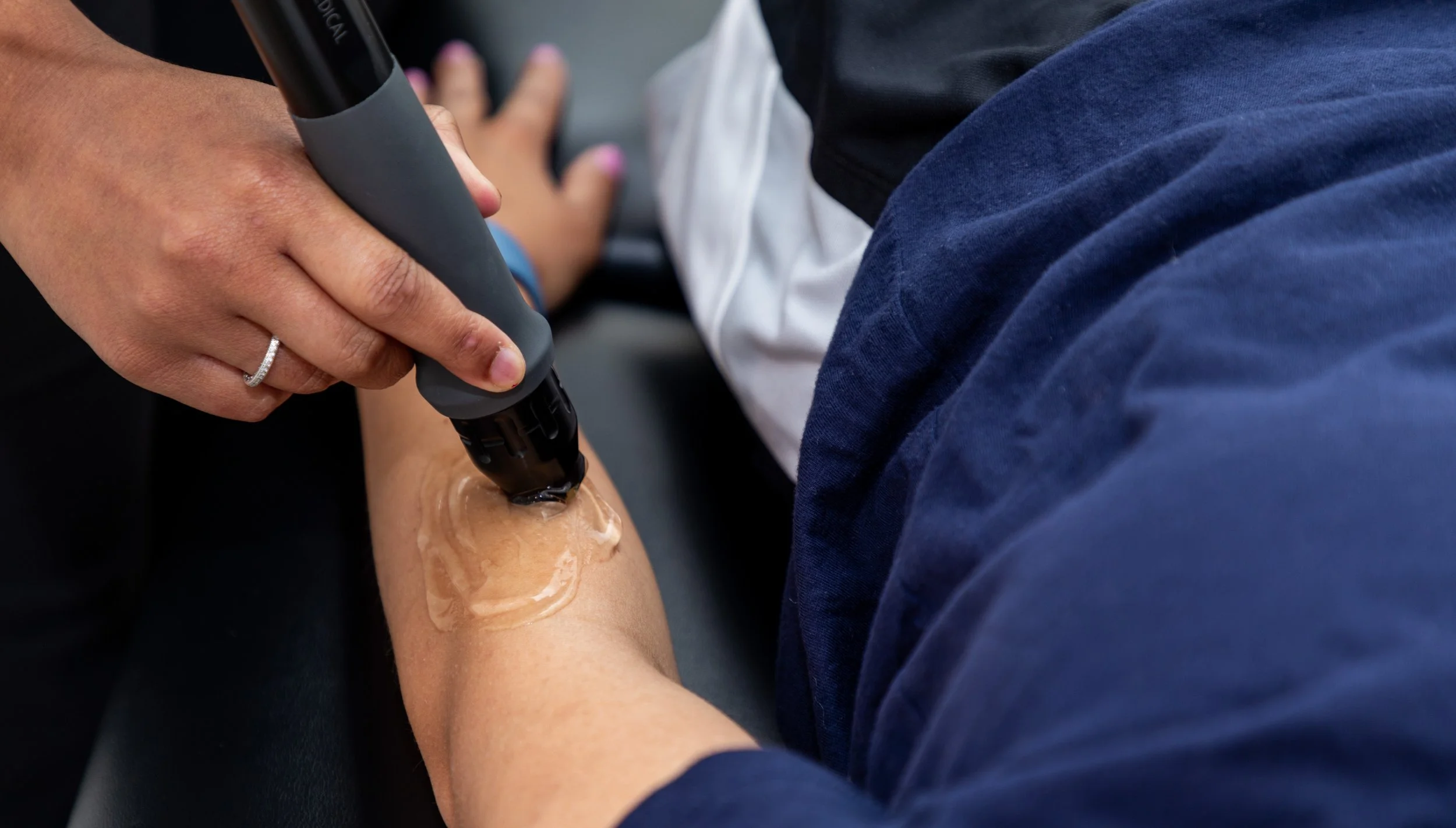
Shockwave therapy uses high-energy acoustic waves that are delivered through the skin to targeted tissues (muscles, tendons, etc.) in the body. These sound waves travel into the affected area and create stimulation at a cellular level. This includes creation of new blood vessels, the release of growth factors and other processes that the body would naturally use to heal tissue. This process helps “kick-start” the body’s natural healing response, particularly in tissues that have become stagnant or slow to recover.
How does it work?
Shockwave therapy works through several key mechanisms:
Stimulating blood flow: The acoustic waves promote increased circulation and the growth of new blood vessels, bringing oxygen and nutrients that are essential for healing.
Breaking down scar tissue or calcifications: In chronic conditions, abnormal tissue buildup can limit movement and cause pain. Shockwave can help to disrupt these deposits.
Triggering tissue regeneration: The treatment encourages the production of collagen, a vital component for repairing tendons and other soft tissues.
Reducing pain sensitivity: Shockwave can influence nerve activity, helping to decrease pain signals sent to the brain.
What conditions can it treat?
Shockwave therapy is most commonly used for chronic, stubborn conditions that haven’t responded well to rest, exercise, or manual therapy alone. These include:
Plantar fasciitis (heel pain)
Tennis elbow (lateral epicondylitis)
Achilles tendinopathy
Patellar tendinopathy (jumper’s knee)
Calcific shoulder tendinitis
Greater trochanteric pain syndrome (hip pain)
It’s particularly effective for tendon-related issues, where blood supply is limited and healing tends to be slow.
What to expect during treatment
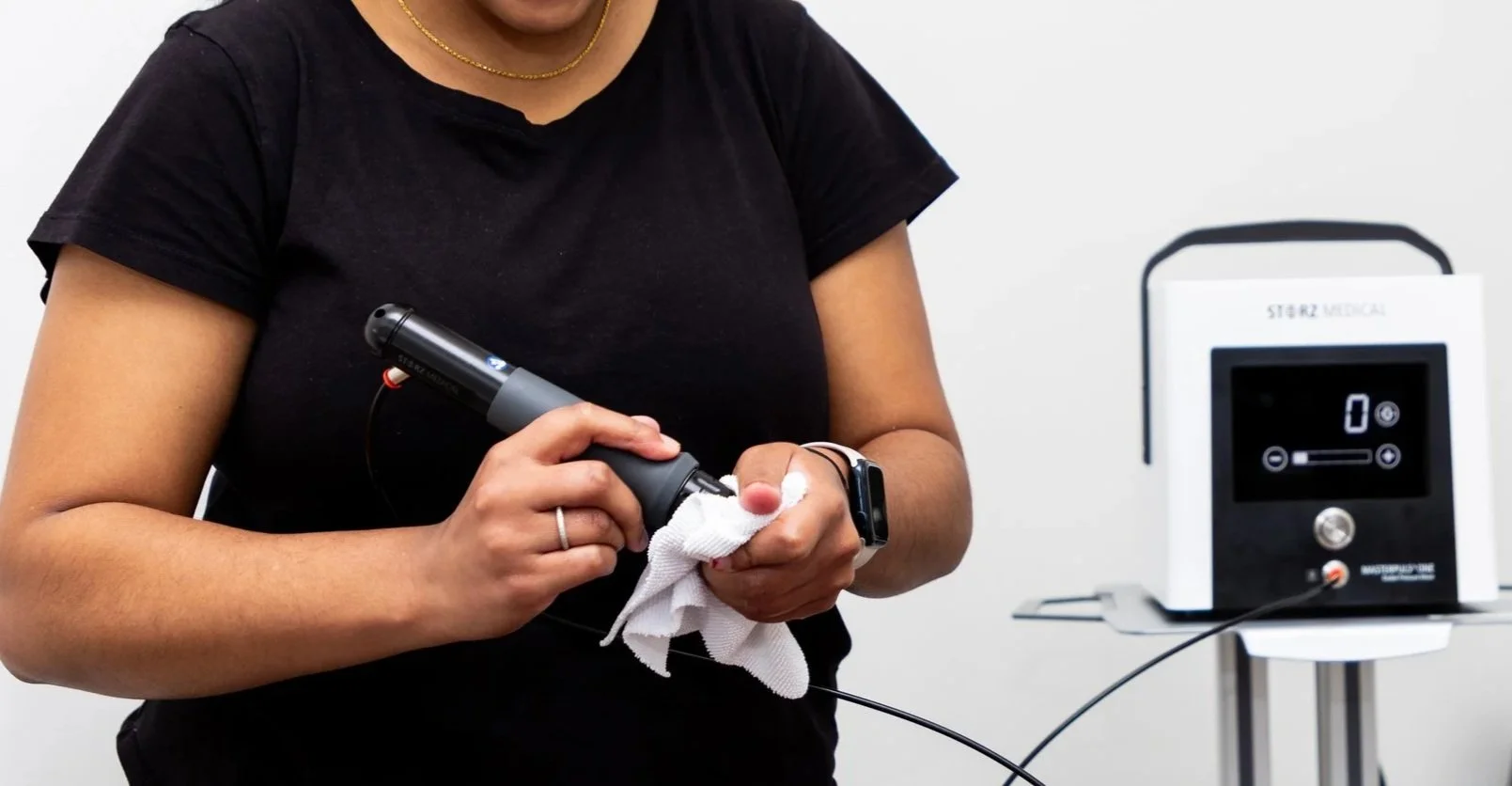
A typical shockwave therapy session is relatively quick, usually lasting 15 minutes. The treatment itself can last from 5-10 minutes depending on the size of the area being treated. Your physiotherapist will apply a gel to the treatment area and use a handheld device to deliver the shockwaves. You may feel a tapping or pulsing sensation, and while some discomfort is normal—especially in sensitive areas—it is generally well tolerated. The intensity can be adjusted to suit your comfort level.
Most treatment plans involve a series of sessions, often spaced about a week apart. Many patients begin to notice improvements after a few treatments, although optimal results typically develop over several weeks as the tissue continues to heal.
Is it safe?
Shockwave therapy is considered safe when performed by a trained professional. Side effects are usually mild and temporary, such as slight redness, swelling, or soreness in the treated area. However, it may not be suitable for everyone. It is generally avoided in individuals who are pregnant, have pacemakers or individuals with a history of cancer. Your physiotherapist with determine if you’re an appropriate candidate during your assessment.
Why consider shockwave therapy?
One of the biggest advantages of shockwave therapy is that it offers a non-surgical, drug-free option for managing chronic pain. For patients who feel “stuck” in their recovery or have plateaued with traditional physiotherapy approaches, it can provide a valuable boost to the healing process.
That being said, shockwave therapy is rarely used in isolation. It is most effective when combined with a comprehensive rehabilitation plan that includes targeted exercises, education, and load management. Think of it as one tool within a broader strategy to help you move better and feel better.
The bottom line
Shockwave therapy is a safe, effective, and evidence-supported treatment for a range of chronic musculoskeletal conditions. By stimulating the body’s natural healing processes, it can help reduce pain, improve function, and get you back to the activities you enjoy. If you’re dealing with a persistent injury that isn’t improving, it may be worth discussing with your physiotherapist to see if shockwave therapy is a good fit for your recovery plan.
